Sugar Paste: Types and How to Use
By HomeBakers Team
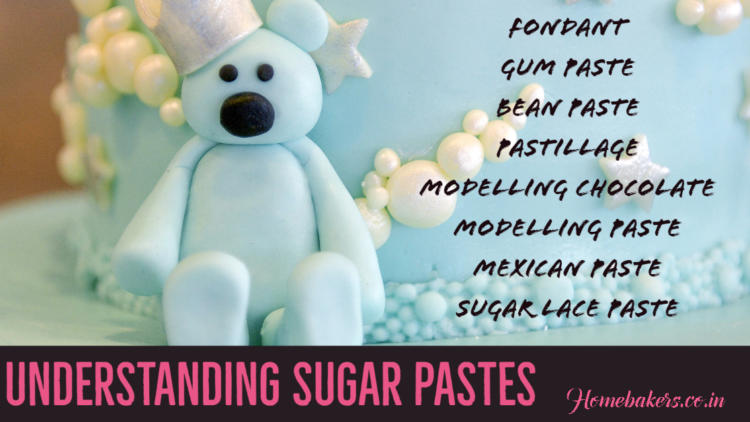
Want your cakes to look extra special? We invited Ashwini Sarabhai of The Dream Cakes (www.TheDreamCakes.com) to explain the sugar pastes every baker hears about but often mixes up: Fondant, Gum Paste (Flower Paste), Bean Paste, Pastillage, Mexican Paste, Modelling Paste, Modelling Chocolate and Sugar Lace Paste. Here is an excerpt from that session.
Fondant
Fondant is the everyday dough. It is made from icing sugar, liquid glucose, shortening, gelatine (or agar agar for vegetarian fondant) and a little glycerine. It stretches, rolls out smoothly, keeps well and is mostly used to drape cakes and make figures.
Pro tip: powdered glucose will not work here. Liquid glucose is key.
Gum Paste vs Fondant
Gum paste is similar to fondant, with two changes: no glycerine, and the addition of Gum Tragacanth, Tylose Powder or Carboxymethyl Cellulose (CMC). Glycerine is what makes fondant soft, so gum paste is firmer and stronger. Think sugar flowers: it rolls so thin you can read a textbook through it.
Gum Tragacanth is a natural gum, made from tree sap that is collected, dried and powdered (a type of gum is used in the Indian Gond Ke Ladoo). Natural gums are strongest but can be hard to find and pricier. Tylose is a synthetic gum whose key ingredient is CMC, available in grocery stores. Tylose is better quality, but local CMC works too. Test the quantity you need: check the stretch, how thin it rolls, and its strength.
How to tell them apart: pull off a small piece. If you hear a pop, it's gum paste. Fondant simply stretches.
Storage: both last 1–2 weeks at room temperature (depending on weather) wrapped in cling film in an airtight container, up to 3 months refrigerated, and up to a year frozen. Thaw to room temperature before use.
Bean Paste
Made from beans such as moong dal, lotus seeds or kidney beans. The beans are soaked, boiled, mixed with icing sugar and other ingredients, then steamed. It's a lengthy process, but the result is delicious and great for flowers.
Pastillage
Pastillage looks like fondant or gum paste but is much stronger and dries much faster, which makes it ideal for big, sturdy structures. Work quickly. Its main ingredient is gelatine, with no glycerine; tylose powder is optional. Famous cake artist Chef Serdar Yener often uses pastillage for structures.
Mexican Paste
Just three ingredients: icing sugar, Gum Tragacanth/Tylose/CMC, and water. Easy and versatile, but brittle when rolled thin, so it lacks the strength for flowers. It's ideal for monograms, lettering, embossing and standing 2D pieces. With no softening agent, it dries almost instantly, so work fast.
Modelling Paste
Mix fondant and gum paste 50:50 and you get modelling paste, great for figurines and toppers. Pure fondant toppers can sag and flatten; pure gum paste is hard to mould and expensive. The blend gives you gum paste's hold with fondant's taste and easy moulding.
Modelling Chocolate
Couverture or compound chocolate mixed with liquid glucose or corn syrup: essentially a chocolate-based modelling paste, and kids love eating it. Make it a day ahead and refrigerate. It will be hard, so cut it and knead it with warm hands until soft.
It doesn't stretch like fondant, so covering a cake is harder, but it gives figurines a smooth, shiny finish. Thanks to its cocoa butter, cracks blend away with a rub of your finger, unlike fondant, which leaves a faint line. Many bakers mix it into fondant to get stretch plus blendability.
Sugar Lace Paste
Made from Tylose Powder, water, glycerine and icing sugar. Beat the tylose and water well, add a little glycerine and icing sugar, then colour if you like. Spread on a lace mat and air-dry for 6–8 hours, or bake at 80°C.
Frequently Asked Questions
How can we make fondant (and vegetarian fondant) at home?
Ingredients:
- Icing sugar – 500 g
- Liquid glucose – 85 g
- CMC – 2 tsp
- Shortening – 1 tsp
- Water – ⅓ cup
- Gelatine, or agar agar for vegetarian – 1 tbsp + 1 tsp
Method:
- Sift the icing sugar and CMC together and make a well in the middle.
- Soak the gelatine or agar agar in room-temperature water for 5 minutes, then bring to a boil until it turns liquid.
- Add the shortening and heat, but do not boil.
- Pour into the well and knead into a dough. If too wet, add more icing sugar.
- Brush with shortening, cling wrap, and refrigerate overnight before use.
How can we make gum paste / flower paste (and vegetarian) at home?
Ingredients:
- Gelatine – 20 g, or agar agar – 8 g
- Water – ⅓ cup
- Liquid glucose – 85 g
- CMC powder – 17–18 g
- Icing sugar – 600 g to start
- Shortening – 1 tbsp
Method:
- Bloom the gelatine or agar agar for about 5 minutes.
- Add the shortening and heat until it just melts (about a minute in the microwave).
- Stir in the liquid glucose; the mixture should be no warmer than lukewarm.
- Sift the icing sugar and CMC into a bowl and make a well.
- Pour in the liquid, mix and knead, adding icing sugar if sticky.
- Form a ball, brush with shortening, cling wrap and store until use.
The Dream Cakes also shares a free recipe video at thedreamcakes.com/free-videos.
How long can a fondant decoration stay outside?
As long as you like as a keepsake, as long as it's protected from sunlight and humidity. Whether it's still edible depends on the shelf life of the fondant used.
Can we add Tylose powder to fondant to make gum paste?
Yes. It's called emergency gum paste. It's not as good as real gum paste, but works for toppers or flowers when you're short on time.
Can we add both CMC and Tylose to fondant?
CMC and Tylose are the same thing; Tylose is a better-quality brand. If you have both, use Tylose.
How long do homemade gum paste and fondant last?
About 1–2 weeks on average, less in hot, humid weather. Wrap in cling film and store in an airtight container; frozen, they keep for a year. Thaw to room temperature before use.
How do we know if fondant or gum paste has gone bad?
If it smells off, looks mouldy or loses colour, it's gone bad. Fondant can leave oil in summer. That alone doesn't mean it's spoiled, but check for the other signs.